
Tiffany Setting Ring: What, Price, Care
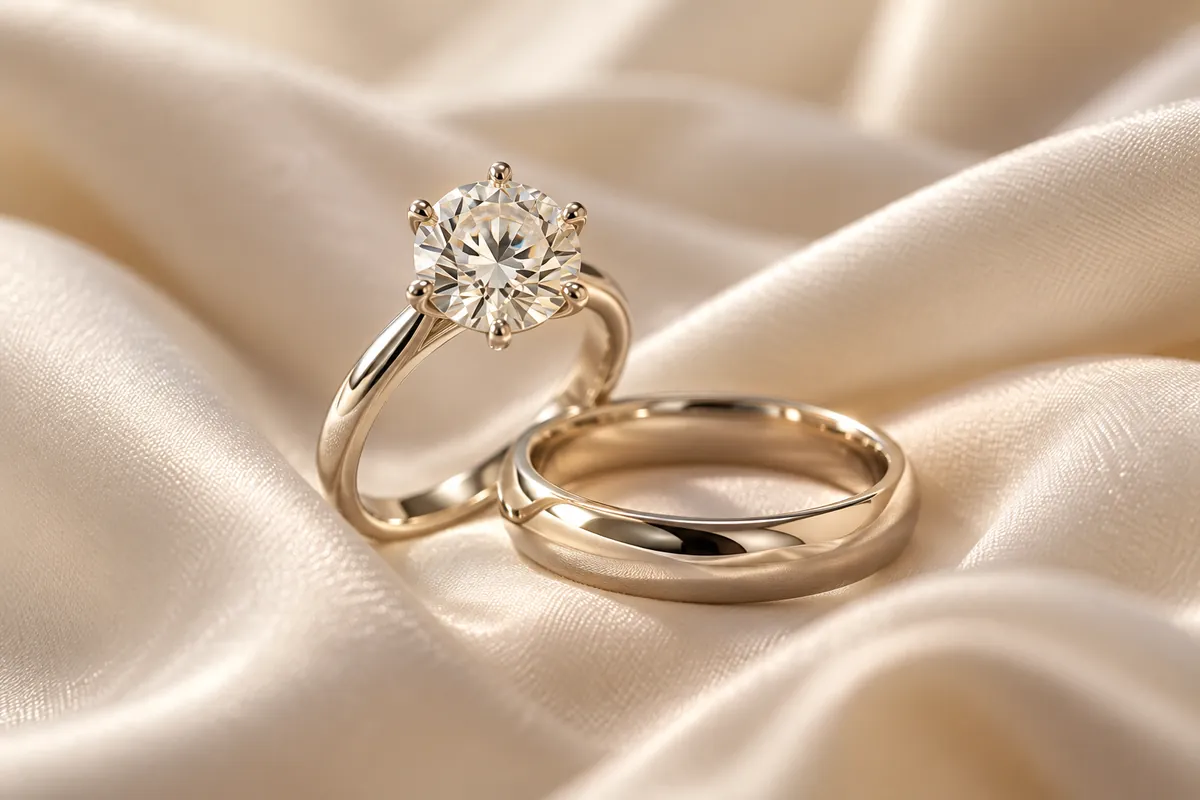
What is a Tiffany setting ring? How it differs from a regular solitaire, starting prices, and how secure the 6 prongs are — from ZILVY Bangkok.
In this article
What Is a Tiffany Setting Diamond Ring?
A Tiffany setting diamond ring is a single-stone (solitaire) ring held by six metal prongs that lift the stone above the band, letting light reach it from every side. Earlier rings typically set the stone low in a bezel. The design was introduced by Tiffany & Co in 1886 and has been a global engagement-ring standard ever since.
"Tiffany setting" describes a 6-prong, raised way of setting a diamond — not an exclusive brand name. Jewelers everywhere, ZILVY included, make this style, keeping the same character: a slim band, tall prongs, and the centre stone as the clear focus.
At ZILVY, the Tiffany setting sits within the Solitaire category, which comes in 153 designs for women. Every design is set with the same D colour, 3EX cut diamonds — what changes is the band shape and prong count.
Tiffany (6-Prong) vs 4-Prong Solitaire, Bezel and Pavé: What Differs?
These four are different ways of setting the same diamond — not a difference in diamond quality. This table compares how each looks, how light performs, how secure it is, and who it suits.
| Setting type | Look | Light performance | Security / snagging | Best for |
|---|---|---|---|---|
| Tiffany (6-prong) | Tall prongs lift the stone above the band | Best — light enters the stone from every angle | Tall prongs catch on fabric or hair more easily | Wanting the biggest, brightest-looking stone for the budget |
| 4-prong (standard solitaire) | Fewer prongs, more of the stone visible | Very good, close to 6-prong | Snags slightly less than the Tiffany setting | A minimal look, on smaller stones |
| Bezel | Metal wraps fully around the stone, no raised prongs | Lower — metal covers part of the stone's sides | Most secure, nothing to snag | Hands-on work, sports, or fear of a loose stone |
| Pavé | Small stones set flush around the band | Good — sparkle spreads around the band, not from one stone | Flush surface snags less, but is harder to clean between stones | Wanting all-round sparkle over one focal stone |
How Much Does a Tiffany Setting Ring Cost, and How Many Designs Are There?
A Tiffany setting ring (6-prong solitaire) at ZILVY starts at 5,000 THB, and the most common starting price in the solitaire group is 21,000 THB, seen on 32 of 153 designs. (Updated September 2026)
For comparison, halo — another popular style — starts at 8,000 THB (192 designs). Solitaire and Tiffany-setting prices spread wider because the budget goes entirely into the centre stone, with no surrounding diamonds to soften the size, so price tracks the chosen carat more directly than other styles.
| Metric | Figure |
|---|---|
| Solitaire designs (women) | 153 designs |
| Lowest starting price | 5,000 THB |
| Most common starting price | 21,000 THB (32 designs) |
| Compared to Halo (popular alternative) | From 8,000 THB (192 designs) |
Does a 6-Prong Tiffany Setting Let the Diamond Fall Out Easily?
Not easily, as long as the prongs stay tight and get checked regularly. Six prongs actually hold the stone slightly more securely than four, thanks to more contact points — but because the diamond sits raised above the band, the prongs are more likely to catch on fabric, hair, or knock against a table edge than a bezel setting, a trade-off between looks and toughness.
The real risk usually comes from prongs that have loosened from cumulative knocks, not from having too few of them. With regular care and check-ups, a Tiffany setting is confident everyday wear for most people.
Can You Wear a Tiffany Setting Ring Every Day, and How Do You Care for It?
Yes, it holds up fine for daily wear if you follow a few simple care habits.
- Check the prongs every 6-12 months at a jeweler, to catch looseness before the stone shifts or falls out.
- Take the ring off before exercising, gardening, washing dishes, or any activity with repeated hand impact.
- Store the ring in its own compartment so the prongs don't snag or rub against other jewelry.
- ZILVY checks the prongs and cleans the ring for free for the life of the ring — visit anytime.
Who Suits a Tiffany Setting Engagement Ring, and How Do You Match It to a Wedding Band?
A Tiffany setting engagement ring suits anyone who wants the centre diamond to be the clear focus with nothing competing for attention, and who wants a classic look that has stayed relevant for over 130 years.
Because the prongs lift the diamond, the wedding band worn alongside it should be a plain or slightly contoured shape that sits flush without catching or knocking against the Tiffany prongs' base. The ZILVY team always recommends trying both rings together before production.
If you are budgeting for both the engagement ring and the wedding band, the related guides at the end of this article cover wedding ring pricing and budgeting in detail.
FAQ
What is a Tiffany setting ring?
A Tiffany setting ring is a solitaire that holds the centre diamond with six metal prongs raised above the band, letting light reach the stone from every side. It was first designed by Tiffany & Co in 1886 and became a global engagement-ring standard.
How is a Tiffany setting different from a regular solitaire?
Only in prong count and setting height — Tiffany uses six raised prongs, while a standard solitaire typically uses four. Diamond quality and setting metal can be identical in both.
How much does a Tiffany setting ring cost at ZILVY?
Solitaire rings, Tiffany setting included, start at 5,000 THB across 153 designs for women at ZILVY. The most common starting price is 21,000 THB (32 designs); the final price depends on carat size and setting metal.
Does a 6-prong Tiffany setting let the diamond fall out easily?
Not easily, if the prongs stay tight and get checked every 6-12 months. Six prongs hold the stone slightly more securely than four, but because the diamond sits raised, it's more prone to catching on fabric or knocks than a bezel setting.
Who suits a Tiffany setting engagement ring?
Anyone who wants the centre diamond to be the clear focal point and likes a classic look. The wedding band worn alongside it should be plain or slightly contoured so it sits flush without catching the prongs.