
9K vs 14K vs 18K Gold: Which to Choose?
Compare 9K, 14K and 18K gold: 37.5%, 58.5% and 75% gold content, how color and scratch resistance differ, who each suits, plus how platinum compares.
In this article
What the Karat Number Means
Karat measures gold content — 9K is 37.5% gold, 14K is 58.5%, 18K is 75%, with the remainder being strengthening alloys. Higher karat means richer color and higher price, but softer metal.
"Higher is better" isn't true for daily-wear rings — 9K and 14K resist scratches better than 18K.
Comparison Table: 9K vs 14K vs 18K Gold
The three golds used for most ring settings, side by side — real gold content, visible color, scratch resistance, and who each one suits.
| Gold | Gold content | Color | Scratch resistance | Best for |
|---|---|---|---|---|
| 9K | 37.5% | Palest gold tone of the three | Toughest — the most hardening alloy | Hands-on work, daily wear, entry budget |
| 14K | 58.5% | Clearly gold, not overpowering | Durable enough for every day | Anyone wanting both color and durability |
| 18K | 75% | Richest, most luxurious gold tone | Softer, marks more easily | Rich color and the international wedding standard |
Choosing by Lifestyle and Budget
Sterling Silver 925 (rhodium-plated) — most accessible, white-gold look, pairs from ~16,000 THB. 9K gold — the toughest real gold, ideal for hands-on work (~28,000 THB/pair). 14K — the popular balance of color and durability (~59,000 THB/pair). 18K — the international wedding standard with rich color (~80,000 THB/pair). Platinum — most durable, naturally white, hypoallergenic, for the premium tier.
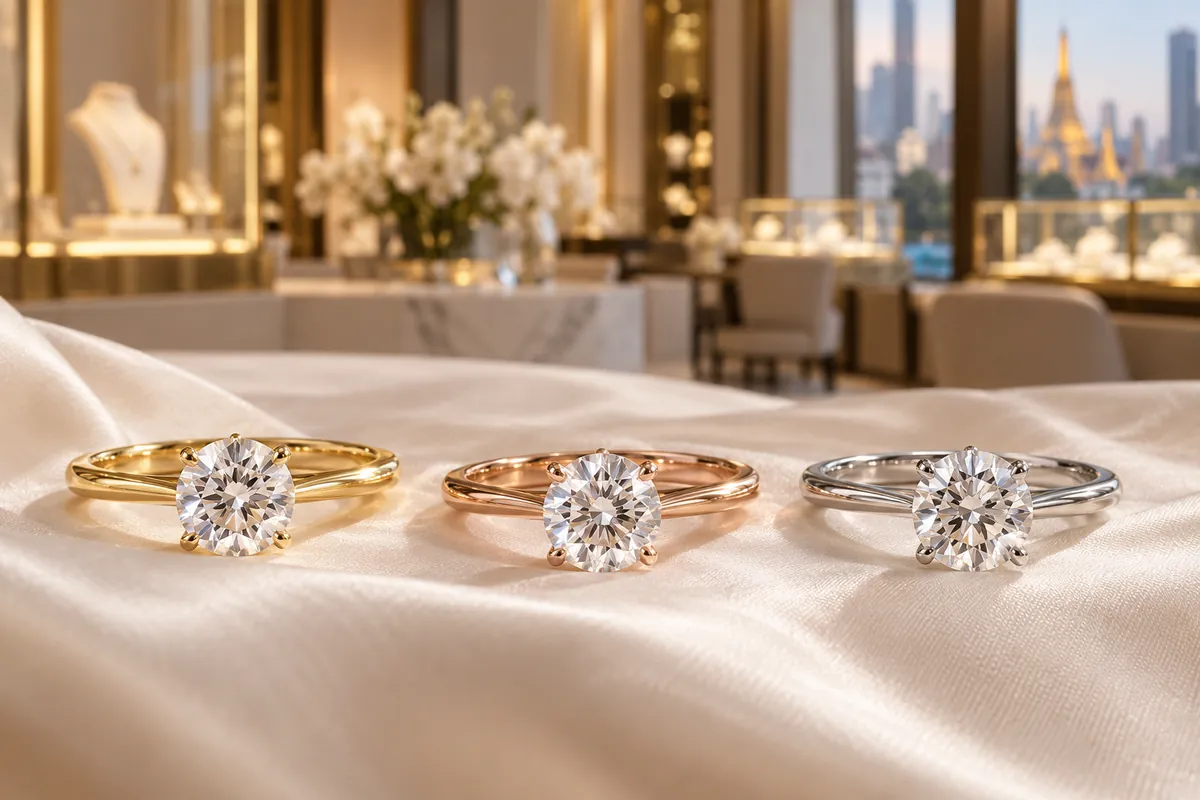
Every metal comes in white, yellow, or rose tones, all set with the same D color diamonds.
Caring for Each Metal
Plated silver and white gold benefit from periodic rhodium re-plating; yellow and rose gold need almost no special care; platinum develops a patina that always polishes back.
ZILVY customers don't need to worry either way — cleaning and ring care are free for life.
FAQ
Does 9K gold fade or tarnish?
It doesn't flake — it's solid gold, not plating. It may dull slightly over time, which polishes right back, unlike plated jewelry where the color layer wears off.
Which metal for sensitive skin?
Platinum is the safest — high purity and hypoallergenic. 18K gold is next with minimal alloy. If you react to nickel, tell us before production so we choose the right alloy mix.
White gold vs platinum?
White gold is gold alloyed with white metals and rhodium-plated (needs periodic re-plating); platinum is naturally white throughout, heavier and more durable, at a higher price.
Which karat is best for daily wear?
If you work with your hands or take the ring on and off often, 9K and 14K make the most sense — harder alloys that resist scratches better. Choose 18K if you want the richest color and accept a little more care.